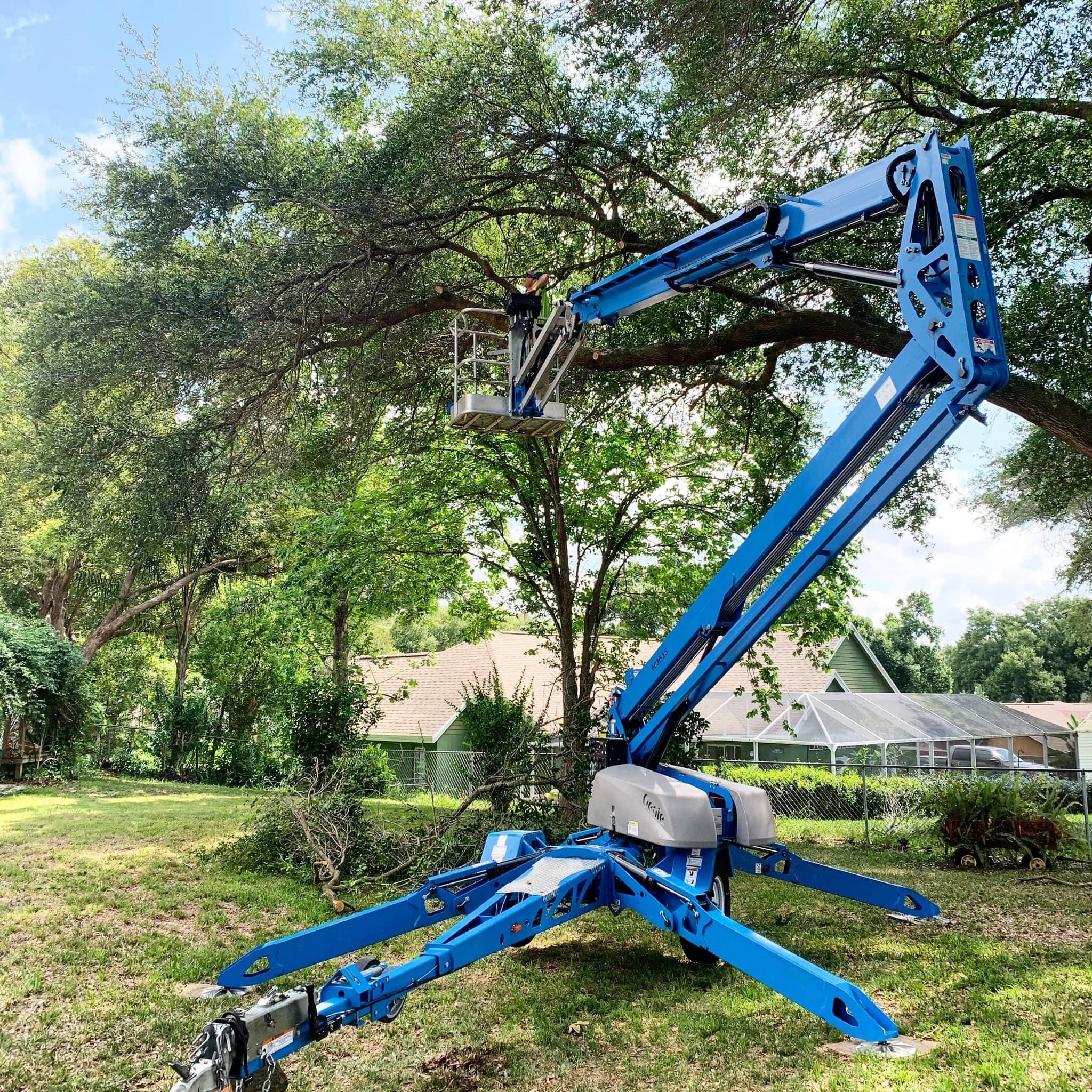
A dense, overgrown tree crown isn’t just an aesthetic issue — in Apopka’s storm environment, it’s a liability. The same heavy canopy that provides shade and character to your yard becomes a sail in high winds, catching gusts that the tree’s structure wasn’t designed to handle. Crown thinning is the professional arboricultural practice of selectively removing branches to reduce that wind load, improve structural balance, and extend the healthy life of your trees.
At Mid Florida Tree Care, our ISA-certified arborists and experienced crew perform tree thinning throughout Apopka in accordance with ANSI A300 standards — the professional benchmark for pruning and crown care. We don’t just hack branches to reduce bulk. We selectively remove the right branches to achieve lasting structural improvement while preserving the natural character of your trees.
What Tree Thinning Actually Means
Crown thinning is one of several pruning objectives defined by ANSI A300, and it’s important to understand what it is — and what it isn’t. Thinning means selectively removing branches from within the crown to reduce density without significantly reducing overall crown size. The goal is to allow better air circulation and light penetration while reducing the surface area the crown presents to wind.
What thinning is not: it’s not topping, hat-racking, or aggressive crown reduction. Those practices — which you’ll unfortunately see offered by unlicensed crews throughout Florida — cause severe and lasting damage to trees. A topped tree responds with vigorous, weakly attached regrowth, develops decay at the cut sites, and becomes structurally worse than it was before. If someone quotes you “tree topping” as a solution to an overgrown Apopka tree, that’s a red flag.
Our ISA certified arborists, affiliated with the Florida Chapter of the ISA, follow the ANSI A300 guidelines that distinguish proper thinning from harmful cutting practices. The difference in outcomes — for your tree’s long-term health and structural integrity — is significant.
Why Tree Thinning Matters Specifically in Apopka
Apopka’s combination of mature trees and frequent storm exposure makes crown thinning one of the most practical investments a homeowner here can make. Here’s why:
Wind loading reduction. A dense, unpruned crown acts like a solid surface against wind — the tree has to resist the full force of the gust. A properly thinned crown allows wind to pass through more freely, dramatically reducing the bending moment at the base of the tree and in the major scaffold branches. For Apopka’s live oaks and laurel oaks — which can develop enormous canopy spread — this is meaningful storm protection.
Structural defect detection. Thinning a tree requires a professional to get into the canopy and work through it systematically. That process often reveals structural defects — included bark, co-dominant stems, large dead wood, decay pockets — that aren’t visible from the ground. Finding these issues during a routine thinning job creates an opportunity to address them before they become emergency situations.
Crown health improvement. Overly dense crowns suffer from internal branch die-back — interior branches that don’t receive adequate light die off, accumulate as deadwood, and become failure hazards. Regular thinning keeps the interior of the crown alive and healthy, reducing dead branch accumulation and the associated risk.
Light and air flow to your landscape. Beyond the tree itself, thinning improves conditions underneath. If your Apopka lawn is struggling in heavy shade from a large oak, or if shrubs and garden plants are failing to thrive under a dense canopy, targeted crown thinning can make a meaningful difference in how light reaches the ground.
Tree Species We Thin in Apopka
Apopka’s canopy includes several species that benefit significantly from professional crown thinning:
Live oak (Quercus virginiana). Apopka’s most valuable and most common large tree. Live oaks develop enormous, spreading crowns that can become excessively dense over time. Proper structural thinning — removing competing stems, deadwood, and crossing branches — maintains their spectacular character while improving wind resistance and structural integrity. Live oak pruning has specific timing considerations in Florida; our arborists can advise on the optimal schedule.
Laurel oak (Quercus laurifolia). Very common in Apopka but more susceptible to decay and internal structural problems than live oaks. Crown thinning of laurel oaks often reveals early-stage decay or structural defects — exactly the kind of finding that makes professional assessment valuable. Laurel oaks also tend to accumulate significant deadwood, and thinning combined with dead branch removal significantly reduces failure risk.
Water oak (Quercus nigra). Found throughout Apopka’s wetter areas and lake-adjacent neighborhoods. Water oaks are fast-growing and can develop imbalanced crowns quickly. Regular thinning keeps their structure manageable and reduces the risk of large branch failure.
Camphor tree (Cinnamomum camphora). Common in older Apopka neighborhoods, camphor trees grow fast and develop dense, heavy crowns. While many Apopka homeowners ultimately choose to remove camphor trees due to their invasive nature, proper thinning can reduce their storm risk while you plan for eventual replacement with native species.
Magnolia. Southern magnolias are planted throughout Apopka and develop dense, broad canopies. Crown thinning improves their structure, reduces leaf litter accumulation in the interior, and can improve the dramatic appearance of a well-maintained magnolia.
Our Thinning Process — What to Expect
Before any cuts are made, our ISA-certified arborist walks the tree with you and discusses what we’re looking to accomplish. We explain what we’re seeing structurally, identify any concerns worth noting, and confirm the objectives for the pruning before the crew begins work.
Crown assessment. Our arborist evaluates the current crown structure — density, balance, branch architecture, and any visible defects. For larger trees, we use binoculars and, where appropriate, get into the canopy to assess conditions that aren’t visible from the ground.
Selective removal. Working systematically through the crown, our crew removes branches according to the thinning plan: deadwood, crossing and rubbing branches, competing leaders where structural improvement is the goal, and interior branches that are causing excessive density without contributing to crown structure. All cuts follow ANSI A300 standards — proper cut location, angle, and size to promote natural wound closure.
Post-thinning review. After the work is complete, our arborist does a final review of the crown from the ground. We want to confirm that the thinning achieved the intended result and that the tree presents a natural, balanced appearance — not a noticeably “worked” look.
Cleanup. We chip all removed material on site and haul it away. Your yard gets left clean. All crew members wear full PPE in compliance with Florida DACS regulations for commercial tree work in the state.
Tree Thinning vs. Other Pruning Objectives
Professional arboricultural pruning has several defined objectives beyond thinning — understanding the difference helps you communicate what your trees actually need:
Crown cleaning focuses on removing dead, dying, diseased, or weakly attached branches. This is appropriate for nearly any tree and is often combined with thinning.
Crown raising removes lower branches to provide clearance over structures, vehicles, or pedestrian areas. Common along Apopka driveways and near buildings.
Crown reduction reduces the overall size of the crown while maintaining its natural form. This is different from topping — a proper crown reduction follows the branch to a lateral that’s large enough to assume the terminal role. It’s a more complex pruning objective and requires more experience to execute correctly.
Structural pruning focuses on developing a strong, well-spaced scaffold branch architecture in young or maturing trees. This is the most impactful intervention for long-term tree structure — work done on a young live oak can determine how safely it grows for the next 50 years.
Our ISA-aligned arborists can help you identify which pruning objective is appropriate for each tree on your Apopka property.
How Often Does Tree Thinning Need to Happen in Apopka?
Most mature Apopka trees benefit from professional pruning every 3–5 years. Faster-growing species like water oak and camphor may need attention more frequently. Young trees being structurally pruned may need follow-up every 1–3 years during their formative period.
The consistent recommendation from arborists — and from the Florida ISA Chapter — is to not wait until a tree becomes a visible problem before pruning. Preventive maintenance is almost always less expensive and less disruptive than reactive work after a branch fails or a storm causes damage. If you’re on a pre-season schedule with your Apopka trees before hurricane season, you’re ahead of most homeowners in the area.
Service Area — Tree Thinning Throughout Apopka
We provide crown thinning and professional pruning services throughout Apopka — including Errol Hills, Errol Estates, Rock Springs Ridge, Kelly Park Estates, Bear Lake, Piedmont, and communities along Kelly Park Road, Ponkan Road, and the SR-429 corridor. We also serve Altamonte Springs, Ocoee, Winter Garden, and surrounding Northwest Orange County communities.
For palm tree trimming in Apopka — a separate process from crown thinning on hardwoods — we have the same professional expertise and follow ISA recommendations for Florida palm species.
Frequently Asked Questions
How much does tree thinning cost in Apopka?
Pricing depends on the size of the tree, canopy density, access conditions, and the extent of work involved. A standard thinning of a medium-sized live oak on a typical Apopka residential property generally runs $250–$600. Larger trees, multiple trees, or difficult access situations affect pricing. We always provide a written estimate before any work begins — no surprises.
When is the best time to thin trees in Apopka?
In Florida’s subtropical climate, there isn’t the same hard seasonal restriction that applies in northern states. That said, for live oaks specifically, Florida arborists generally recommend avoiding major pruning during the flush of new spring growth and during the peak of summer heat stress. Late fall and winter pruning — October through March — is typically ideal in Apopka. For emergency structural work or significant deadwood removal, timing is less critical. Our arborists can advise on the optimal timing for your specific trees.
Can you thin my tree without changing how it looks?
Yes — a properly executed crown thinning should leave the tree looking natural and well-maintained, not noticeably “pruned.” If anything, a good thinning job makes the tree look healthier and more open without changing its overall silhouette. What you should not see after professional thinning is large obvious cut stubs, a dramatically reduced crown, or bare-looking scaffold branches stripped of lateral growth. If you’re looking at a tree after a crew has worked on it and it looks like that — it wasn’t proper thinning.
My tree is touching my house — is that a thinning job?
That’s likely a combination of crown raising and directional pruning rather than pure thinning. We can address branches encroaching on structures through a targeted pruning approach that addresses the clearance concern while maintaining the tree’s overall health. Give us a call and we’ll come take a look — it’s a free estimate either way.
Does thinning help with oak galls or disease?
Thinning improves air circulation through the crown, which reduces the humidity levels that favor certain fungal diseases. It also removes deadwood that can harbor insect pests. However, thinning is not a substitute for targeted treatment of active disease or infestation — if your Apopka oak has a specific disease concern, our arborists will assess and recommend the appropriate response alongside any pruning work.
Schedule Tree Thinning in Apopka Today
Don’t wait for a storm to show you what your trees actually needed. Professional crown thinning is one of the most effective things you can do to protect your Apopka property and extend the life of your trees. Mid Florida Tree Care‘s ISA-certified arborists and experienced crew are ready to help. Call today for your free estimate.